
Reviewing Major Industrial Incidents Through an RCM Lens
eliability-Centered Maintenance (RCM) provides a structured and defensible methodology for determining what must be done to manage failures that truly matter. When applied rigorously, every step in the RCM process contributes to sound decision-making — including:
- Definition of the operating context
- Identification of functions and functional failures
- Analysis of failure modes
- Evaluation of failure effects
- Assessment of failure consequences
- Selection of proactive and default actions
RCM establishes a common technical language and systematic framework for assessing risk, prioritizing failure management strategies, and implementing appropriate controls.
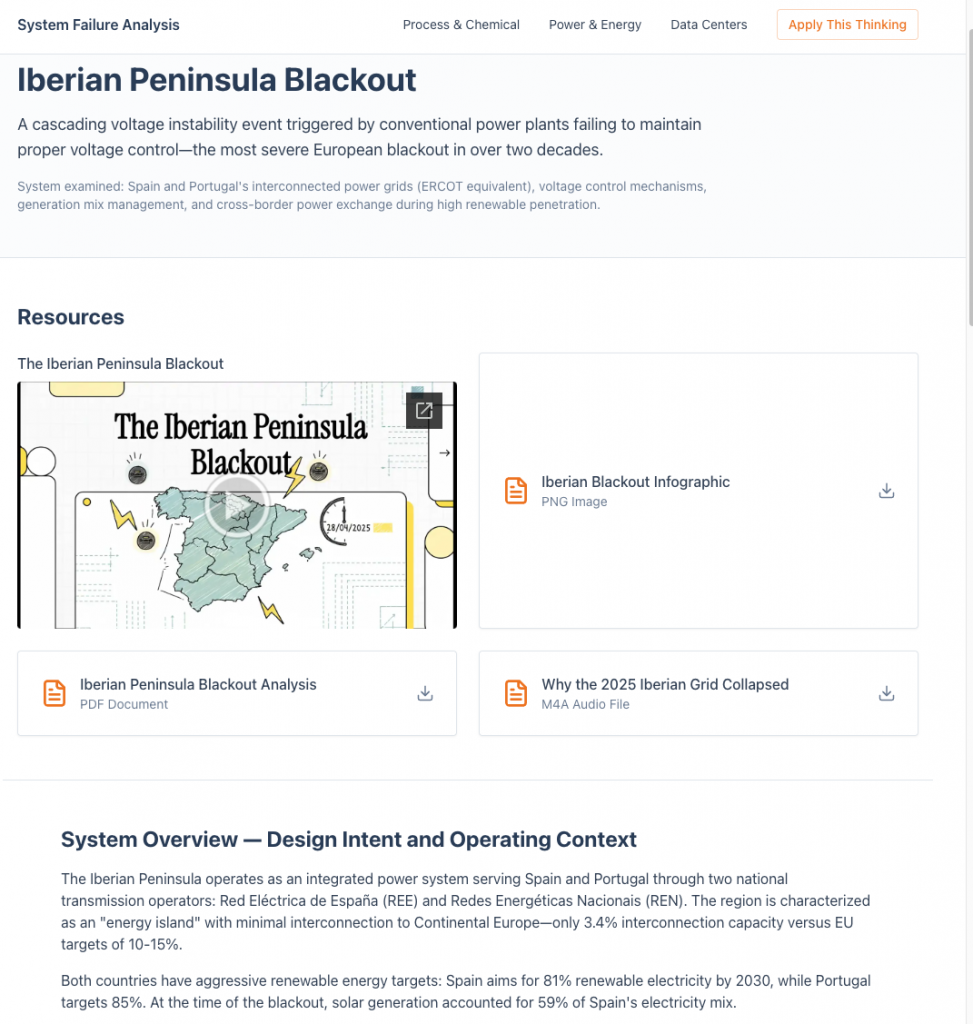
To illustrate the practical impact of this approach, several major industrial incidents have been examined from an RCM perspective. Each case is analyzed in terms of operating context, required functions, failure modes, effects, consequences, and the tasks that should have been selected to manage the associated risks.
Industrial incidents always present important lessons. However, these examples highlight an additional and critical insight: when RCM is applied correctly — and its recommendations are fully implemented — the conditions that lead to such catastrophic events can be systematically identified and effectively controlled.
In other words, these incidents were not simply failures of equipment, but failures of failure management.
At present, 3 industry sectors are covered; Process and Chemical, Power and Energy, and Data Centres
The website gives videos, diagrams, audio files and documents. The link to the home page is given below.