
Our RCM Videos have been grouped into 6 categories:
- Introduction
- Principles, background and overview
- Process Steps
- Applying and Implementing RCM
- RCM Results
- Other Resources
Introduction
2:02 min
Introduction to Reliability Management and the series of short videos (Level 1)
A brief Introduction to this series of videos from the Founder and Managing Director of Reliability Management, Chris James.
Principles, background and overview
3:54 min
What is Reliability?
5:49 min
What is RCM?
A high level overview of the RCM process – what it consists of, what it is applied to and by whom, and what it delivers. This video includes the background to the process and some philosophical principles behind it
21:55 min
The 7 questions – An overview of the RCM process
More detail about the seven questions of RCM
8:37 min
History and development of RCM
A description of the history of RCM – why it was developed and where it came from.
10:23 min
Alternatives to RCM for developing a maintenance programme
One major deliverable from the correct application of the RCM process is a world-class maintenance programme – what maintenance tasks should be done and at what interval. This video considers what alternative approaches might be used to determine a maintenance programme for a physical asset, and why RCM is the best approach.
11:07 min
The 6 failure patterns
A key piece of research behind the RCM process relates to the 6 patterns of failure. These describe the conditional probability of failure of components against time. What do they show and why do they matter?
Process steps
7:34 min
Operating Context
The Operating Context affects all the answers to the seven questions of RCM. This video covers what the Operating Context is, what an Operating Context statement describes and why it is so important.
12:46 min
Functions
What are Functions, how are they worded, and what types of functions should be recorded
4:26 min
Functional Failures
A brief video about the second question of RCM- Functional Failures
8:08 min
Failure Modes
What are failure modes, how are they worded and why they are important. This video also considers what types of failure mode should be recorded in RCM
6:31 min
Failure Modes – level of detail
This video covers an additional key point about failure modes – at what level of detail should they be recorded. This is one area some analysts can get horribly wrong, with catastrophic results.
3:05 min
Review of Maintenance Programs using the RCM Process
A brief video about how to use RCM to review an existing maintenance programme, or manufacturers’ maintenance recommendations.
3:06 min
Failure Effects
This video covers Failure Effects. It describes what information they contain, how it is recorded, and why this information is recorded.
7:28 min
RCM Analysis FMEA vs FME(C)A
This video covers criticality and its relevance to RCM. It goes on to describe the difference between an FMEA and a FMECA.
6:02 min
Failure Consequences
This video describes the categories of Failure Consequences in RCM and some key points for correctly categorising Failure Consequences
13:51 min
The Decision Diagram
The RCM Decision Diagram is explained in this video. We don’t just cover the questions in the Decision Diagram themselves, but the reasons the questions are in a certain order.
13:34 min
Technical Feasibility of proactive maintenance tasks
This video describes the different types of proactive maintenance task and what questions need to be addressed to determine if they are technically feasible. Also, what do we mean by ‘technically feasibile’
10:07 min
Worth Doing
Proactive Maintenance tasks also need to be Worth Doing. What makes a task worth doing and how is this determined? These questions are addressed in this video
6:43 min
Redesign
This video describes what is meant by the term ‘redesign’ in RCM, and what activities it covers.
15:21 min
Failure Finding
This video covers Failure Finding; what it is applied to, and how to determine the correct task and appropriate interval.
Applying and Implementing RCM
10:15 min
Part 1 – Applying RCM
This video covers who applies RCM, and why, and what it is applied to. Also how to select assets for analysis.
17:09 min
Part 2 – The RCM Facilitator
This video describes the role and skills of a very important member of the RCM Review Group – the RCM Facilitator
17:09 min
Part 3 – Implementing RCM
What should be done to ensure the outcomes of the RCM process are implemented, and why this is important.
3:55 min
Part 5 – RCM software, continuous improvement
This video describes the role of software in RCM. It also describes how RCM allows for Continuous Improvement of physical assets and how software can support this
RCM Results
4:56 min
Case study 0 – Results of RCM in the aircraft industry
This video covers the results of the application of RCM in Civil Aviation over a period of several decades.
5:35 min
Case study 1 – Process Example
This video describes how RCM can be used to improve a business process.
7:15 min
Case study 2 – Instrument Example
RCM can be applied to any physical asset type, including Instrumentation. This video describes an examples of its application to instruments, with amazing results
7:45 min
Case study 3 – Mixture of recommendations
Another example of the application of RCM that delivered stunning results. This is notable because of the ‘mixed bag’ of outcomes that came out of the study.
3:21 min
Case study 4 – Reciprocating Compressor Examples
Several successful RCM projects have been carried out on Reciprocating Compressors. These are described in this short video.
3:17 min
Case study 6 – Human Error
The outcomes of an RCM analysis are not just maintenance tasks. This video describes a Case Study in which almost all tasks identified addressed causes of failure due to human error
Other Resources
5:34 min
RCM Certification
This video covers RCM standards and RCM certification
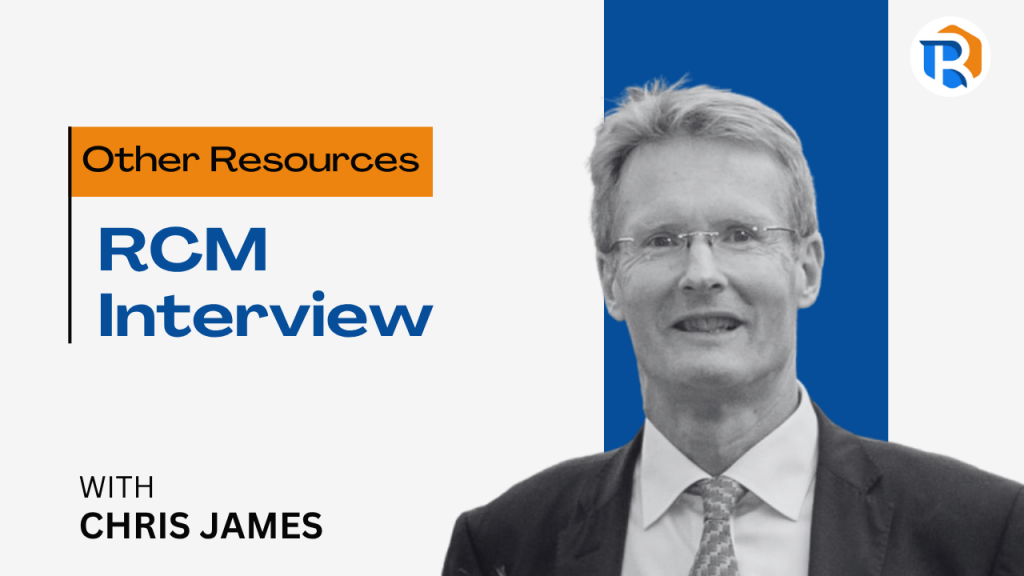
12:36 min
RCM Interview
An interview scenario is used to address some common questions about RCM