
Time-to-Competence and Its Relevance to RCM
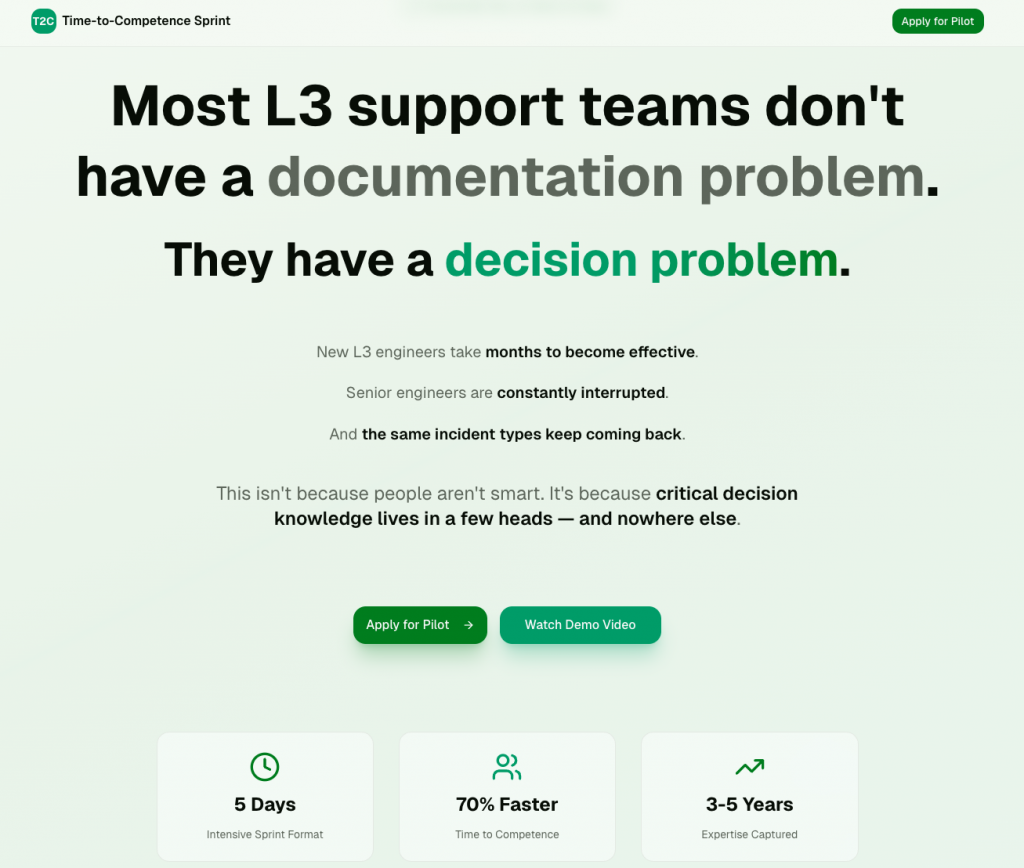
The Time-to-Competence Sprint framework focuses on rapidly accelerating the capability of Level-3 technical support engineers by capturing and transferring decision-making expertise that otherwise resides tacitly in senior engineers’ heads. The site argues that the real bottleneck is not traditional training content, but decision knowledge — knowing which symptoms matter, which diagnostics are effective, and when to escalate — and that this knowledge is rarely codified in usable form. The sprint extracts patterns from real incidents, interviews with senior staff, and recurring decision pathways to generate structured competence maps, playbooks, case libraries, and escalation rules that shorten ramp-up time and reduce dependency on a few individuals.
From an RCM perspective, this approach aligns with how RCM treats human competence and human error as failure modes that require deliberate management:
- In RCM, human error and gaps in operator or maintainer competence are causal failure modes that can lead to ineffective decisions, incorrect actions, and elevated risk if not addressed through explicit tasks.
- RCM defines tasks not only to prevent equipment failures but also to ensure that personnel have the right knowledge, decision skills, and judgement to manage operating contexts and failure consequences effectively.
- By explicitly capturing decision logic and making it usable under real-world conditions, the Time-to-Competence Sprint creates proactive human competence tasks that reduce the “failure of response” associated with inexperienced staff, much as RCM would prescribe competence validation or decision support tasks where human reliability is critical.
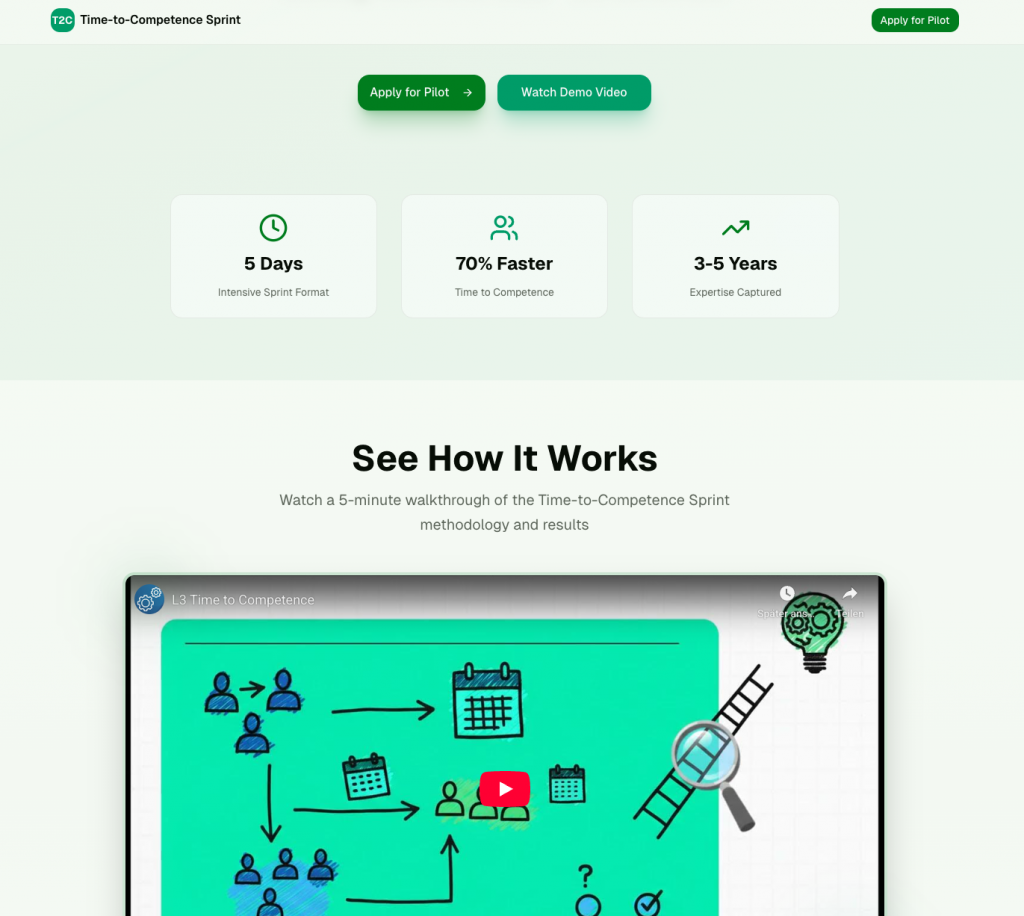
In essence, the methodology on the site is a practical application of RCM’s inclusion of human performance and competence as integral failure modes and management tasks, accelerating how quickly individuals reach a competent and autonomous operating state.